
By Editor
The Ekiti State Government has commenced a mass artificial insemination programme aimed at improving livestock genetics, reproductive efficiency and productivity across the State.
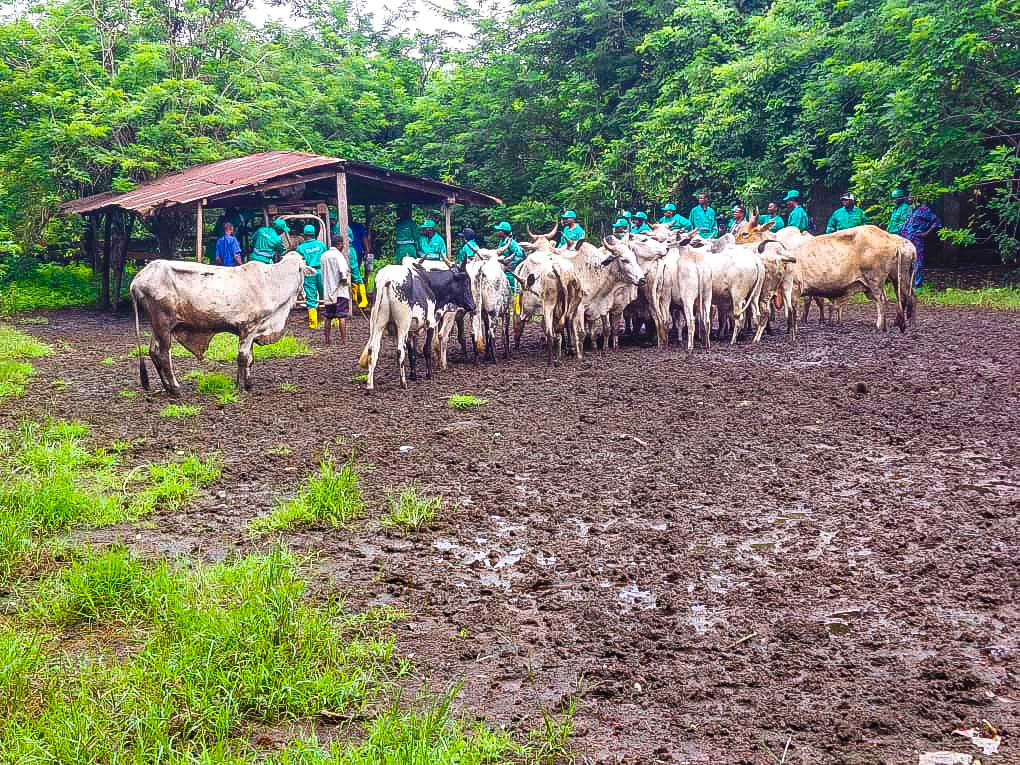
The initiative, being implemented through the Livestock Productivity and Resilience Support Project (L-PRES), was officially flagged off on Thursday in Ado Ekiti at an event tagged “Flag-off of Mass Artificial Insemination, Training and Induction of Inseminators in Ekiti State”.
Addressing participants at the event which attracted numerous veterinary professionals, inseminators and other stakeholders in the livestock sector in the State and beyond, the State Project Coordinator of L-PRES, Mr. Olayinka Adedipe, said the initiative was designed to improve the quality and productivity of livestock through the adoption of modern breeding techniques.
He explained that artificial insemination would provide livestock farmers with access to improved genetic materials, thereby facilitating the production of animals with desirable traits and enhanced productive potential.
Adedipe noted that the technology could also contribute to disease control by reducing indiscriminate breeding and limiting the need for the movement of breeding animals between farms.
According to him, the programme forms part of the strategic interventions of the Ekiti State Government and L-PRES to strengthen the livestock value chain, improve farmers’ income and contribute to food and nutrition security in the state.
The Lead Consultant from Genex Urus Company Ltd., Mr. John Adekunle, described artificial insemination as an effective modern breeding technique that enables farmers to introduce superior genetics into their herds without the need to maintain breeding bulls.
He said the proper application of the technology could accelerate genetic improvement, increase milk and meat production, enhance reproductive performance and contribute to the development of more productive and resilient livestock herds.
Adekunle urged the participants to make effective use of the knowledge and equipment provided, stressing the importance of proper animal identification, accurate record-keeping, disease prevention and control, as well as the professional handling and storage of breeding materials.
As part of the programme, complete artificial insemination kits, cattle and goat ear tags, and 3.9-litre liquid nitrogen tanks were distributed to participants to support the delivery of artificial insemination services across the state.
Two of the participants, Mrs. Mary Olagoke and Mr. Jegede Oluwadare, expressed appreciation for the training, saying it had equipped them with practical knowledge and skills to support livestock farmers in their respective communities.
They commended the Ekiti State Government and L-PRES for providing the training and equipment, noting that the initiative would facilitate the adoption of improved and modern breeding practices among livestock farmers.
The programme is expected to strengthen artificial insemination services across Ekiti State and contribute to the sustainable development, genetic improvement and productivity of the state’s livestock sector.
